A major clinical trial involving 50 hospital intensive care units (ICUs) throughout New Zealand and Australia will test if artificial intelligence (AI) can help doctors save more patients’ lives who are on life support.
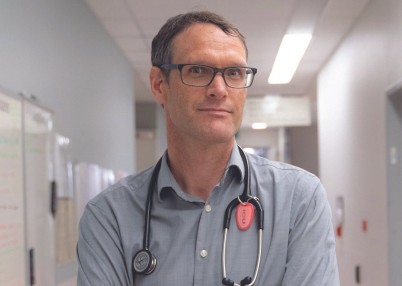
Clinical researcher Professor Paul Young, Deputy Director of the Medical Research Institute of New Zealand and Co-Clinical Leader of the ICU at Wellington Hospital, has received a $5 million Programme Grant from the Health Research Council of New Zealand (HRC) to lead this new trial that will recruit more than 24,000 patients1.
The ‘REVOLUTION trial’ will be the first major clinical trial worldwide to evaluate whether AI-guided treatment using machine learning improves survival in the ICU. If so, it could set an international benchmark for the safe, transparent, and rigorous application of AI-derived models in clinical decision-making.
The trial is one of two Programme Grants (combined value of $10 million) and 38 Project Grants (combined value of $46.8 million) announced today by the HRC.
HRC Director of Investments and Co-Chief Executive (acting) Mr Stacey Pene says clinical trials are a key priority for the Government and this year’s Programme and Project Grants funding rounds support eight clinical trials across the country.
“The majority of these Programme and Project Grants support the development and retention of the clinician researcher workforce in New Zealand by including clinician researchers as members of the research team. Strengthening engagement with clinicians will help ensure treatments are used more effectively to deliver better outcomes for patients,” says Mr Pene.
The grants also cover a wide range of the Government’s other priority health areas, including supporting new models of care and treatments for cancer and mental health and addiction.
Professor Young and his team will use machine learning to evaluate the best targets for delivering oxygen to patients on life support in ICUs.
About twenty million people require life support around the world each year, and oxygen is the most widely used ICU therapy.
Professor Young says they will first refine and optimise their machine learning model using data from their recently completed HRC-funded Mega-ROX trial – the world’s largest ICU trial involving 40,003 patients from 137 ICUs in 14 countries.
The model will use these data, together with personal data submitted by clinicians when patients are admitted to the ICU, to estimate the individual benefit – or harm – of higher versus lower oxygen levels for patients on life support.
From there, they will compare the personalised delivery of oxygen treatments to patients when doctors use machine learning to help them decide what level of oxygen each patient receives, versus the standard approach when doctors decide the oxygen level without AI.
“We aim to use machine learning to transform critical care from a ‘one-size-fits-all’ model to a personalised care model,” says Professor Young.
“It is easy to imagine a scenario where a treatment benefits a population ‘on average’ but where only a small group of patients benefit greatly, and most are in fact harmed. Machine learning could provide the information clinicians need to ensure they give the treatment only to those patients who will benefit and not to those who will be harmed.”
Professor Young says the potential global public health benefits of using AI to optimise a common therapy like oxygen for patients who need life support in the ICU are profound.
“By implementing our findings, hundreds of thousands of lives could be saved each year in ICUs around the world, even if our trial confirms only a modest reduction in deaths.”
Mr Pene says this clinical trial involves every major ICU in New Zealand, bridging the gap between research and clinical practice nationwide.
“This study has the potential to fundamentally change the way clinical trial results are translated into patient care by integrating machine learning with high-quality data from a randomised clinical trial,” he says.
“It also provides a unique opportunity for training the next generation of ICU researchers and clinician-scientists, ensuring that New Zealand retains and develops the necessary skills to address critical health issues.”
You can find a full list of all the 2026 Programme and Project recipients below. Please note that the HRC has also approved one additional Programme Grant (valued at $5 million) and one additional Project Grant (valued at $1.2 million); however, these grants are not listed below as the contracts are still subject to negotiation.
1 Funding from the Health Research Council will support the New Zealand component of the trial, while the NHMRC will fund the Australian component.
Recipients of the HRC’s 2026 Programme Grants
Professor Mark Richards, University of Otago
Myocardial marker enhanced data to improve cardiovascular care in New Zealand
60 months, $4,998,662
Professor Paul Young, Medical Research Institute of New Zealand
Machine learning to personalise oxygen therapy in the intensive care unit
60 months, $4,999,855
Recipients of the HRC’s 2026 Project Grants
General category
Dr Gemma Aburn, Dr Tess Moeke-Maxwell, The University of Auckland
Pae Herenga - Informing service development of paediatric palliative care
36 months, $1,199,999
Dr Christina Baggott, Health New Zealand - Waikato
SENSAI: Smartwatch Early Notification System for Asthma Intervention
36 months, $1,438,106
Associate Professor Mark Bolland, The University of Auckland
Very long-term fracture prevention with intermittent zoledronate: 10-year extension
48 months, $1,199,554
Dr Janice Chew-Harris, University of Otago
Novel therapy for heart attacks
36 months, $1,200,000
Professor Christopher Bullen, The University of Auckland
Breaking free from nicotine: a randomised controlled trial
36 months, $1,439,854
Dr Amanda Eng, Massey University
Co-creating a mental health care pathway for the NZ’s nursing workforce
36 months, $1,199,560
Professor Katie Groom, The University of Auckland
PROMOAT - The First PLATIPUS Pregnancy Domain
48 months, $1,440,000
Dr Sarah-Jane Guild, The University of Auckland
Transforming hydrocephalus care with home brain pressure monitoring
36 months, $1,199,637
Dr Akilesh Gokul, The University of Auckland
Community-based crosslinking treatment in keratoconus
48 months, $1,198,805
Professor Parry Guilford, Dr Michael Dunnet, University of Otago
A blood test to mitigate and reduce New Zealand's colonoscopy waiting lists
36 months, $1,198,927
Dr Matthew Hobbs, University of Canterbury
Health impacts of community water fluoridation: an intervention study
36 months, $1,199,381
Associate Professor Taisia Huckle, Massey University
Co-designing better health service delivery to tackle opioid overdoses
36 months, $1,200,000
Professor Ngaire Kerse MNZM, The University of Auckland
Music and Movement for Mild Cognitive Impairment: the RGM trial
30 months, $1,166,667
Dr Campbell Le Heron, Dr Erin Cawston, University of Otago
Transforming diagnostic pathways for Alzheimer’s disease using blood biomarkers
36 months, $1,199,972
Dr Julie Lim, The University of Auckland
Targeted antioxidant delivery strategies to prevent lens cataract
36 months, $1,199,999
Associate Professor Ramakrishnan Mani, Dr Sharon Awatere, University of Otago
Brief mindfulness meditation intervention for chronic musculoskeletal pain
36 months, $1,439,534
Dr Rachelle Martin, Dr Lesley Middleton, University of Otago
Embedding disabled people’s expertise in health design
36 months, $1,199,775
Dr Susan McAllister, Dr Nina Scott, University of Otago
Implementing a new partnership model for elimination of tuberculosis for Māori
36 months, $1,198,720
Professor Peter Mace, Dr Daniel Conole, University of Otago
Developing new drugs to shape the local immune environment
36 months, $1,199,958
Dr Samantha Marsh, Professor Nikki Turner, The University of Auckland
Shifting focus: Risk-framed messaging and visualisation for childhood vaccines
36 months, $1,200,000
Dr Matthew McNeil, University of Otago
Trapping antibiotics inside pathogens to accelerate infectious disease therapy
36 months, $1,199,888
Dr Rachael Niederer, Auckland Hospitals Research and Endowment Fund
Herpes zoster and neuroinflammation: a modifiable pathway to dementia
60 months, $1,199,806
Dr David O'Sullivan, Malaghan Institute of Medical Research
Enhancing mitochondrial metabolism to optimise CAR T-cell therapies
36 months, $1,199,843
Dr Anna Pilbrow, University of Otago
Developing an epigenetic score to identify people at impending risk of a heart attack
36 months, $1,199,762
Dr Rachel Purcell, Dr Tamara Glyn, University of Otago
Tackling early-onset colorectal cancer in Aotearoa
36 months, $1,200,000
Dr Magdalena Ratajska, Dr Vanessa Lau, University of Otago
Ara Hou, Ala Fou: New pathways for breast and ovarian cancer testing in Aotearoa
36 months, $1,200,000
Dr Euan Rodger, Dr Jim Smith, University of Otago
Transforming early prostate cancer detection with a blood-based test
36 months, $1,199,979
Professor Peter Shepherd, The University of Auckland
A new generation of weight loss medication
36 months, $1,198,540
Dr Claire Wang, The University of Auckland
Understanding drug transporter gene variants in NZ prescription drug use
36 months, $1,200,000
Professor Paul Young, Medical Research Institute of New Zealand
Prophylactic antibiotics to reduce mortality in ICU patients with brain injuries
60 months, $1,439,454
Pacific health category
Dr Marianna Churchward, Dr Amy Henry, Victoria University of Wellington, Research Trust
What matters most in palliative care for Pacific families and in what context?
36 months, $1,199,785
Dr Allamanda Faatoese, University of Otago
Building a Pacific CVD biorepository for biomarker discovery and risk prediction
36 months, $1,199,108
Dr Karaponi Okesene-Gafa, The University of Auckland
Co-designing with Pasifika families to improve diabetes in pregnancy management
36 months, $1,199,916
Dr Olivia Perelini, The University of Auckland
Timely detection & treatment: Closing the breast cancer gap for Pacific women
36 months, $1,199,961
Associate Professor Sione Vaka, Moana Connect
Ūloa in Action: Implementing and evaluating a Pacific service model
36 months, $1,200,000
Rangahau Hauora Māori category
Mr Mau Te Rangimarie Clark, Professor Suzanne Pitama, University of Otago
Ka Ora! Improving healthcare provision and outcomes for Māori with Ngā Māuiui Kai
36 months, $1,199,994
Associate Professor Paula King, University of Otago
He Pā Harakeke: Effectiveness of mātauranga Māori early childhood models of care
36 months, $1,199,999
Professor Beverley Lawton, Dr Tania Slater, Victoria University of Wellington, Research Trust
Vaccination to prevent cancer: A gift for our children
36 months, $1,197,515