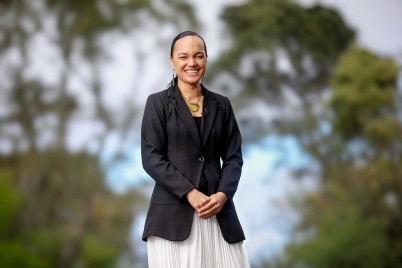
Dr Jamie-Lee Rahiri (Ngāti Porou, Ngāti Whātua o Kaipara, Te Ātihaunui-a-Pāpārangi) has been recognised for leading a highly successful research programme focused on improving surgical outcomes for Māori and strengthening the Māori surgical workforce.
A general surgical trainee at Auckland’s North Shore Hospital, Dr Rahiri received the 2026 Health Research Council (HRC) Te Ata Hāpara Award at the Royal Society Te Apārangi Research Honours ceremony in Auckland. The award recognises her contribution as an emerging researcher advancing Māori health through excellent and impactful research.
HRC Chief Executive Professor Hannah Buckley says that since completing her PhD in surgery at the University of Auckland in 2020, supported by an HRC Māori Health PhD Scholarship, Dr Rahiri has produced more than 50 peer-reviewed publications that have helped shape national conversations on equitable surgical care.
“Jamie-Lee brings together surgical expertise, research excellence and strong connections with whānau and communities to advance Māori health. Her work spans the full spectrum of surgical care, from improving local pathways and whānau experiences to generating evidence that informs national policy and health service delivery.”
Professor Buckley says Dr Rahiri has also demonstrated a strong commitment to developing the next generation of Māori and Pasifika doctors. She established Te Poka Pū, the first national surgical interest hub for Māori medical students and junior doctors, and founded Surgical Sisterhood, a network supporting Māori and Pacific women pursuing surgical careers.
With a passion for gastrointestinal surgery, Dr Rahiri recently completed an HRC Emerging Researcher First Grant examining equity in bariatric (weight-loss) surgery outcomes.
Her research programme has identified barriers to accessing bariatric surgery for Māori, Pacific peoples, rural communities and people living in areas of greater socioeconomic deprivation. These include inconsistent referrals, limited regional services, travel and financial costs, restrictive preoperative requirements and weight stigma.
As part of this work, Dr Rahiri analysed data from more than 20,000 patients who underwent bariatric surgery between 2004 and 2021. Māori and Pacific patients experienced higher mortality within five years of surgery compared with other patients in the study, even after accounting for a range of demographic and clinical factors.
These findings highlight the need to address inequities across the surgical journey, including access to surgery and long-term postoperative care.
“Our research has identified practical opportunities to improve access to bariatric surgery, including Māori- and Pacific-led programmes, community-based care and whānau support. It also challenges us to examine requirements such as preoperative weight-loss targets and whether they create unnecessary barriers to care,” Dr Rahiri says.
Dr Rahiri’s interest in research began as a junior doctor at Middlemore Hospital.
“Early in my career, I encountered the view that research and operating were competing priorities. My experience has shown me how much they can strengthen each other. Clinician-researchers are uniquely placed to ask important questions, find answers and translate them into better patient care.”
She says the driving force behind her research is improving outcomes for the people she treats and their whānau.
“The operations we perform are often the smallest part of a patient’s journey. I want to contribute to the whole experience, including preoperative and postoperative care, and how people are treated throughout that process.”
The Te Ata Hāpara Award adds to a growing list of honours for Dr Rahiri, including the 2025 L’Oréal-UNESCO For Women in Science Fellowship and the 2025 Royal Australasian College of Surgeons John Corboy Medal.
“I feel honoured to receive these awards and see them as a wero to keep going. But none of it would be possible without the support of my whānau. Sharing this journey with them, through all its ups and downs, is what matters most to me.”