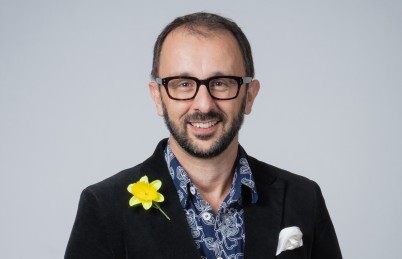
Professor Christopher Jackson has received the Health Research Council (HRC) Beaven Medal at the Royal Society Te Apārangi Research Honours event in Dunedin this evening, recognising his patient-informed research, advocacy and leadership, which have driven some of the most important improvements in cancer care in New Zealand.
HRC Chief Executive Professor Hannah Buckley says Professor Jackson, a medical oncologist at Health New Zealand – Southern and Mercy Hospital in Dunedin and academic at the University of Otago, is an exceptional clinician-researcher whose work has transformed New Zealand's cancer system.
“The extent to which Professor Jackson’s research has been translated into national policy and implemented at scale to improve outcomes for cancer patients is testament to its real-world impact,” she says.
Professor Jackson’s leadership of the five-year HRC-funded PIPER project, which examined more than 5,600 patients with colorectal cancer, helped shape national bowel cancer standards and quality measures. He also developed a national reference library that sets standards for chemotherapy treatment in New Zealand and led the removal of more than 400 low-value chemotherapy schedules, helping deliver more consistent, high-quality cancer care nationwide.
His advocacy, alongside Dr Diana Sarfati, was instrumental in establishing the New Zealand Cancer Control Agency | Te Aho o Te Kahu, a landmark development in New Zealand’s cancer policy landscape. He also played a key role in securing the largest expansion of publicly funded cancer medicines in the country’s history, giving thousands of New Zealanders access to treatments that were previously unavailable.
Through leadership roles with the Cancer Society (2015-2021) and Te Aho o Te Kahu, Professor Jackson has influenced major increases in cancer investment across successive governments. This funding has supported significant growth in regional cancer services, including 14 new cancer treatment sites and service expansions at 15 existing locations.
Professor Jackson says that when he returned to New Zealand after subspecialist training in London, he was struck by what cancer patients were telling him about delays, inconsistent treatment and missed opportunities for care. He soon recognised these experiences reflected broader systemic issues.
“I remember thinking, if I genuinely believe that my job is to help people, then that’s going to involve more than just giving them chemotherapy. I’m going to have to unpick the problems that got them into my clinic in the first place. It’s about helping the people I haven’t met yet as much as the people in my clinic at the time.”
Professor Jackson says receiving the Beaven Medal for excellence in translational health research is particularly meaningful because he has always been driven to ensure research findings lead directly to improvements in practice.
“I don’t have a big discovery to point to, but what I do have is a portfolio of projects over 20 years that have had direct impact because we’ve taken our findings and used them to drive change.
“My methods are simple. I’m a doctor first. Research helps me identify the structural issues behind what I’m seeing in the clinic. From there, I can work with others, including epidemiologists and policymakers, to understand what’s happening on the ground and what can be done about it.”
Professor Jackson says meaningful change requires action on multiple fronts.
“I realised that research alone wasn’t going to be enough. Being on government advisory committees wasn’t going to be enough. I had to combine clinical practice, research and advocacy. Bringing those things together became the catalyst that accelerated a broader programme of change.”
Professor Jackson’s current focus is reducing waiting times for specialist assessment and treatment for people with advanced cancer. His latest programme of work is examining how changes to health system processes and clinical practice could help improve timely access to care.