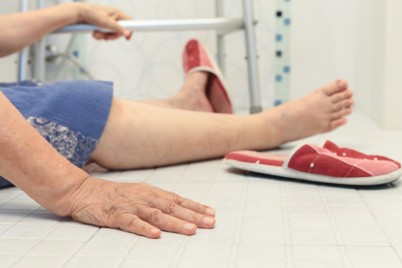
As New Zealand’s population ages bone health will become more important as issues associated with bone disorders and diseases such as bone density loss, osteoporosis, osteoarthritis, fractures and joint replacement become more prevalent.
Associate Professor Mark Bolland and team from the University of Auckland’s Bone and Joint Research Group have received successive grants to conduct a revolutionary 10-year trial investigating the drug zoledronate as a low-cost and effective way of preventing bone fractures in early postmenopausal women.
Zoledronate is an established drug that slows calcium loss from bones and can be given as an infusion. In people with osteoporosis, it has been found to increase bone density, reduce bone pain and reduce the fracture rate by 35-70%.
The 10-year randomised control trial showed that zoledronate given only once every five to 10 years can prevent bone fractures in women who have gone through menopause.
The findings were published in the prestigious New England Journal of Medicine and show that zoledronate was effective in reducing the risk of spinal fractures in early postmenopausal women by 42%, compared to when given a placebo or no treatment, and reducing the risk of all fractures by about 30%.
Since zoledronate was previously only given to people with diagnosed osteoporosis or other high-risk individuals, the results are expected to change practice. As an already available treatment, the study team said women could discuss with their doctors accessing the treatment now to prevent fractures, immediately improving health outcomes for women in New Zealand and globally.
“Previously, there has been no specific treatment offered for women at low risk of bone fractures, but with this research, there is now an evidenced-based, effective and attractive option for women.”
“These results offer a new approach to osteoporosis prevention. Women who are concerned about their bone density or risk of fracture could choose to take occasional, very infrequent zoledronate and prevent fractures happening,” says Dr Bolland.
There are anticipated cost-savings to the health sector through the prevention of fractures and associated health and social care costs. Currently, approximately 80,000 osteoporotic fractures occur in New Zealand annually, with direct costs of $400 million, total costs of $1.5 billion and the loss of 12,000 Quality-Adjusted Life Years. The cost of a zoledronate infusion itself is about $20 per infusion and can be administered by GPs for an administration fee ranging from free to approximately $150. It is expected that for every $1,000 spent administering zoledronate, the country will recoup this money and save an additional $500 through reduced costs from preventing fractures.